
Water Treatment
Water Treatment Marketing: Follow Up After Water Tests and Quotes

Water treatment company marketing works best when it explains testing and quoting in plain language, captures every inquiry in one place, and follows up without pressure. Here's how to build honest marketing that earns local trust.
Introduction
Digital Growth Systems (DGS) is a marketing technology, website, CRM and automation company based in Greer, South Carolina, and the short answer to water treatment company marketing is this: explain your testing and quoting process in plain language, capture every inquiry in one place, and follow up without pressure. That's it. Everything else is detail.
We should be upfront about what we are not. DGS doesn't test water, install filtration systems, or perform any contracting or treatment work. We build the website, phone, CRM and follow-up systems that sit behind a healthy-home service business. We also can't promise rankings or leads, and nobody honest can.
Why start there? Because this industry has a reputation problem, and you inherit it whether you earned it or not. Consumer protection offices keep warning homeowners about door-to-door "free tests" and scare pitches. The Minnesota Department of Health publishes a fact sheet on water treatment scams, and the Water Quality Association has itself called out door-to-door scams. When the trade association is waving a flag, you know the problem is real.
So if you run a small, owner-operated outfit in Greer, Spartanburg, or anywhere else in the Upstate, the opportunity is almost insulting in its simplicity. Be the clear one. Be the one who answers the phone, or texts back when you can't. This guide walks through how.
What Does Honest Marketing Look Like for a Water Treatment Company?
Honest marketing looks boring from the outside. A page that says what you do, where you do it, how a test works, how a quote gets built, and what happens next. No countdown timers. No "act now or your family is at risk."
Boring converts, by the way. A homeowner comparing three water treatment companies on a Tuesday night isn't looking for drama. They're looking for the company that seems least likely to waste their time.
Plain Numbers Over Fear
If you have test results, show the numbers. Say what was measured, what lab or method produced it, and what the reading was. Then say what the options are, including the option of doing nothing yet.
Skip the adjectives. "Your water is dangerous" is a conclusion you probably aren't qualified to make from a sales visit, and marketing tools sure can't make it for you. Plain numbers plus a next step is the whole move. The homeowner decides. You are the person who explained it well.
Clear Certifications
List the credentials your company and your products legitimately hold, on the service page, in plain sight. Name the certification, name what it covers, and stop there. If a product is certified to reduce one thing, don't let the page imply it handles everything.
Never borrow credentials. Not "approved," not "recommended by," not anything that hints at a partnership you don't have. If a certification lapses, update the page. Tedious? Yes. It's also the cheapest trust insurance you'll ever buy.
No-Pressure Follow-Up
Follow-up is where most small shops quietly lose jobs. Not because they pushed too hard. Because they never followed up at all, and the quote sat in someone's truck.
No-pressure follow-up means a short acknowledgment, a reminder that the estimate exists, and an easy way to say "not now" or "stop." We'll get to the setup later. For now, hold onto the principle: persistence and pressure are different things.
Why Do Fear-Based Water Pitches Hurt Local Trust?
Because small markets talk. In the Upstate, your customer's neighbor, her church friend and her brother-in-law all know somebody who got burned by a salesperson. One bad pitch doesn't just lose one sale. It colors how an entire street thinks about your category.
Fear sells once. It rarely sells twice, and it almost never produces referrals or a five-minute review that someone writes happily. A scared customer who later learns the scare was oversold doesn't just leave. They tell people.
Fake-Official Mailers
Mailers dressed up as a "Water Department notice" are the clearest example. The Minnesota Department of Health warns consumers to be wary of sellers who imply government affiliation, and that is exactly the sort of thing that gets a whole industry dragged.
Put your company name at the top. Your address, your phone number, your license information where applicable. If a postcard would confuse a reasonable person about who sent it, redesign the postcard. If you use printed materials at all, our printing services are scoped and quoted separately, but the rule applies no matter who prints them: say who you are.
Kitchen-Counter Test Demos
The dramatic glass of cloudy water. The little meter that beeps. Frankly, these are theater. A TDS meter reads total dissolved solids, which isn't the same as telling someone whether water is safe, and consumer advocates have been pointing at these demos for years.
If you do demonstrate something on-site, label it for what it is: an illustration, not a lab conclusion. Say what it can't tell the homeowner. Then offer an independent lab test for anything formal. That one sentence, honestly delivered, separates you from the folks the warning pages are written about.
Overstated Claims
The Federal Trade Commission has gone after a water filtration marketer over misleading "Made in USA" claims, which tells you regulators do read product pages. Keep your claims to what you can substantiate. The FTC's Green Guides summary is worth a read for anyone writing "pure" or "eco-friendly" copy. I'd add that none of this is legal advice, so run claims past your own attorney.
The same restraint applies to the marketing side. No guaranteed star ratings, no promised lead counts, no "number one on Google" language. Marketing tools organize and amplify what you already do. They don't change what the water is.
Build a Service Website That Explains Testing and Quotes
A website for a water treatment business has one job before it has any other: answer the questions a nervous homeowner is too polite to ask on the phone. What does a test involve? What does it cost, or how is that decided? Who shows up? How long until a quote?
A functional website built around those answers, with calls and estimate forms that feed straight into your CRM, beats a pretty brochure site every time. Foundational title tags, meta descriptions and internal links come with it, which matters, though it's groundwork and not a ranking promise.
Service Pages and Areas
Give each offering its own page: whole-home filtration, softener service, testing, maintenance plans, whatever you actually do. Then say where you do it. "Serving Greer, Taylors, Simpsonville and the rest of Upstate South Carolina" tells both people and search engines something real.
Don't clone one page fifty times with the town name swapped. Google has seen that trick. Write each page for the person reading it, and let the local SEO foundation handle structure and relevance underneath. Ongoing custom SEO campaigns are a separate conversation.
Mobile Call and Estimate Forms
Most of your visitors are on a phone, standing in a kitchen, looking at a faucet. Make the call button big. Keep the form short: name, number, address, what they're noticing, and whether they want a test or a quote.
Short forms get finished. Long ones get abandoned. And whatever is submitted should route to a named person, not a general inbox that three people assume someone else is watching.
Inquiries Captured Into Your CRM
Calls, texts, web forms, email. Every one should land in a single unified inbox with stages, notes, tasks and an owner. That's what keeps a Saturday-morning form fill from rotting until Wednesday.
One honest caveat: the CRM works across supported connected channels. It isn't a universal connector for every tool on earth, so confirm your channels at the demo.
Organize Test Requests and Quote Inquiries
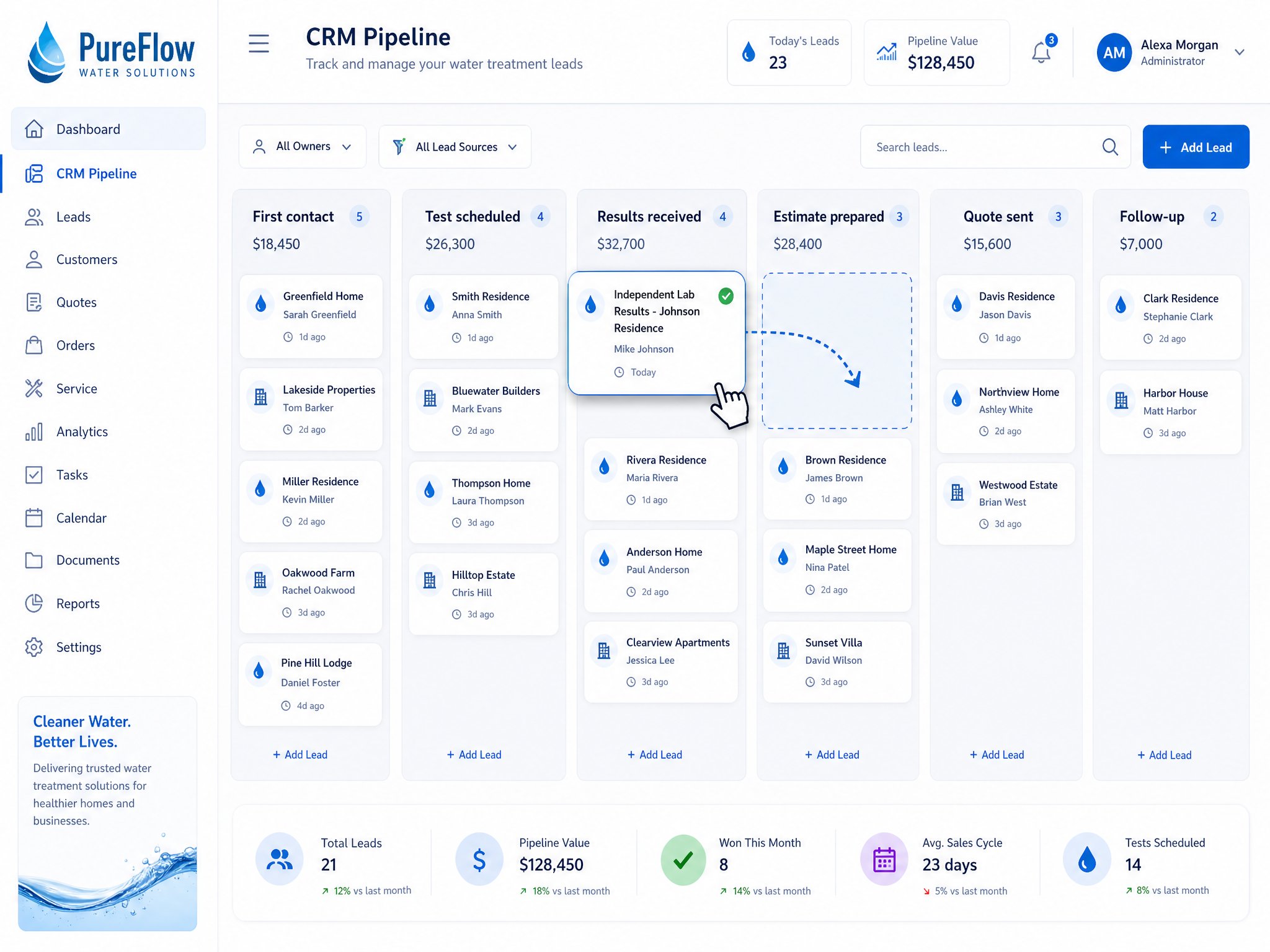
A test request and a quote inquiry are different animals. Someone asking for a test is still gathering information, so they need patience and clarity. Someone asking for a quote has usually decided something and wants a price. Treat them the same and you'll annoy both.
Stages From First Contact to Quote
Build your pipeline so the stages tell the story. A workable version might be:
First contact
Test scheduled
Results received
Estimate prepared
Quote sent
Follow-up or closed
Each stage gets a note field and a task. "Results received" triggers a task to call and explain them. "Quote sent" triggers a reminder to check in. Your stage names can differ, obviously. The point is that anyone on the team can open a record and know what's next.
Notes on Independent Lab Results
When a certified independent lab runs the test, record it. Who collected the sample, when, which lab, the report date, and the numbers as reported. Attach the report if you have it.
Then write down how you explained it to the customer, in plain words. Months later, when they call with a question, you won't be guessing. And the EPA's guidance on certified drinking-water laboratories is a reminder that state-certified labs exist for exactly this kind of verification, so point customers there rather than around it. Don't stretch a result past what the report says.
Team Ownership and Tasks
Every inquiry has one owner. One. Shared responsibility is a polite way of saying nobody's responsible.
Tasks carry the follow-through: call by Thursday, send the lab results, check on the quote. When someone's out sick, reassign in a click instead of discovering the gap a week later.
Set Up Follow-Up After Water Tests and Quotes
Here's the part owners tend to skip, then regret. Most quotes don't die from a "no." They die from silence on both sides.
Automated follow-up fills that silence with agreed sequences, and it can be dialed way down. The water treatment and filtration marketing page lays out how this fits together for trades like yours.
Inquiry Acknowledgments
Someone submits a test request at 8 p.m. A short message goes out: we got it, here's what happens next, someone from the team will be in touch. That's an acknowledgment, not a sales pitch.
Missed-call text back works the same way for calls you can't pick up while you're under a house or in a mechanical room. It sends a configured note, and then a person follows up. It isn't emergency dispatch, and it isn't a promise of an instant human reply. Say that in your own scripts, too.
Estimate Reminders
A quote goes out Monday. A friendly reminder on day three or four asks whether they have questions. Another, later, offers to walk through the numbers again. Two or three touches, tops, in an agreed sequence you've actually thought through.
Write them like you'd talk. "Wanted to make sure the estimate reached you and answer anything that's unclear." No manufactured deadlines.
Stop Rules for Replies and Opt-Outs
This is the part that keeps follow-up from turning into nagging. Configure sequences to stop when a customer replies, and to honor opt-outs. Someone who writes back "we're going with another company" shouldn't get a Thursday reminder.
Calling, texting, email and AI usage terms are confirmed before activation, so sort out your consent practices with your own advisor. We don't give legal advice, but we do think respect is good business.
Request Reviews and Plan Maintenance Outreach
Filtration isn't a one-visit relationship. Cartridges, media and service intervals mean there's a natural reason to stay in touch, which is lucky, because repeat business is the cheapest growth you'll find.
Honest Review Requests
Ask customers you actually served, after the work is done, in plain language. Same ask every time. No discounts for reviews, and no sorting happy customers from unhappy ones before sending the link. That's review gating, and it's the opposite of honest.
A review funnel makes the asking consistent. It can't promise stars. If you did the job well and explained it clearly, the reviews tend to take care of themselves.
Filter-Change Reminder Campaigns
Reminders for filter changes and maintenance visits are the clearest win here. Set them by the service interval your own product guidance specifies, and track who responded and who booked in the CRM.
Keep the tone helpful. It's your customer's equipment. You're reminding them, not alarming them.
Referral and Reactivation Templates
One-click campaigns come with ready-to-customize templates for referral asks, seasonal check-ins, maintenance and reactivation. Customize them, send them. They're templates, not unlimited custom agency labor, so budget your own time for tweaking the wording.
Reactivation is underrated. A list of past customers who haven't been touched in two years is sitting there, and a note saying "it may be time to service your system" is useful to them, not pushy.
What Questions Should You Ask Before Changing Your Marketing?
Before you switch anything, ask whether a stranger could read your site and understand how testing and quoting work. Ask where inquiries land and who owns each one by the next morning. Ask what happens when a quote goes quiet, and whether anything stops the messages when a customer says stop. Ask whether your review requests are consistent, and whether your maintenance outreach is scheduled or just a good intention. Then ask the harder one: could you defend every claim on your site to a skeptical homeowner or a regulator? If any answer is a shrug, that's your starting point. The core connected tools are available together at $297 per month, and the product directory shows how each piece fits.
FAQ
Can marketing tools guarantee leads or rankings? No. Websites, local SEO groundwork and follow-up systems help you capture and organize demand. They don't guarantee volume or position.
Should I use a free in-home test as a sales tool? Be careful. If it's illustrative only, say so, and point to independent lab testing for anything formal.
How long should I wait before following up on a quote? That's your call, based on your sales cycle. Many owners start with a short check-in a few days out, then space later touches further apart.
What if a customer opts out? Configure your sequences to stop on opt-out, and note it in the CRM so no one on the team restarts it by hand.
Does DGS handle ads and ongoing SEO? Custom SEO campaigns and advertising management are separate from the core tools. Printing is quoted on its own, and business phone setup is reviewed at the demo.
Conclusion
Water treatment marketing doesn't have to feel like a sales trick. Say what you do, show your numbers, list your real credentials, and follow up like a neighbor, not a collector. Connect the pieces so nothing falls through: a business phone, a functional website, missed-call text back, a CRM, automated follow-up, and steady review and maintenance outreach.
Want to see how that looks for your shop? Book a demo and we'll walk through it together.
Want these workflows set up for your business?
The Digital Growth System includes missed-call text-back, estimate follow-up, and honest review requests, one plan, $297/month.
Keep reading
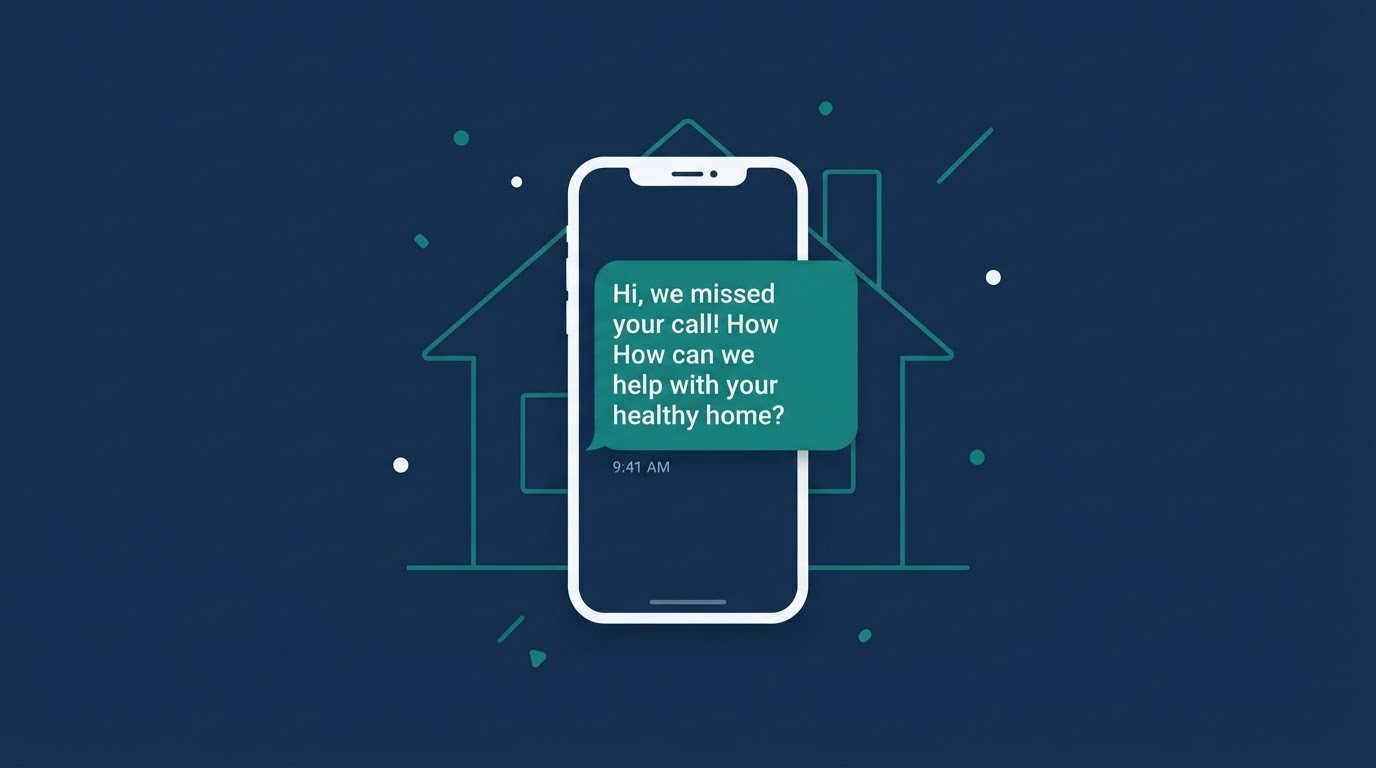
Lead Follow-Up
Missed-call follow-up basics
Most healthy-home service companies miss calls every day, not because they're disorganized, but because they're on a job. Here's how to think about follow-up so those calls don't disappear.
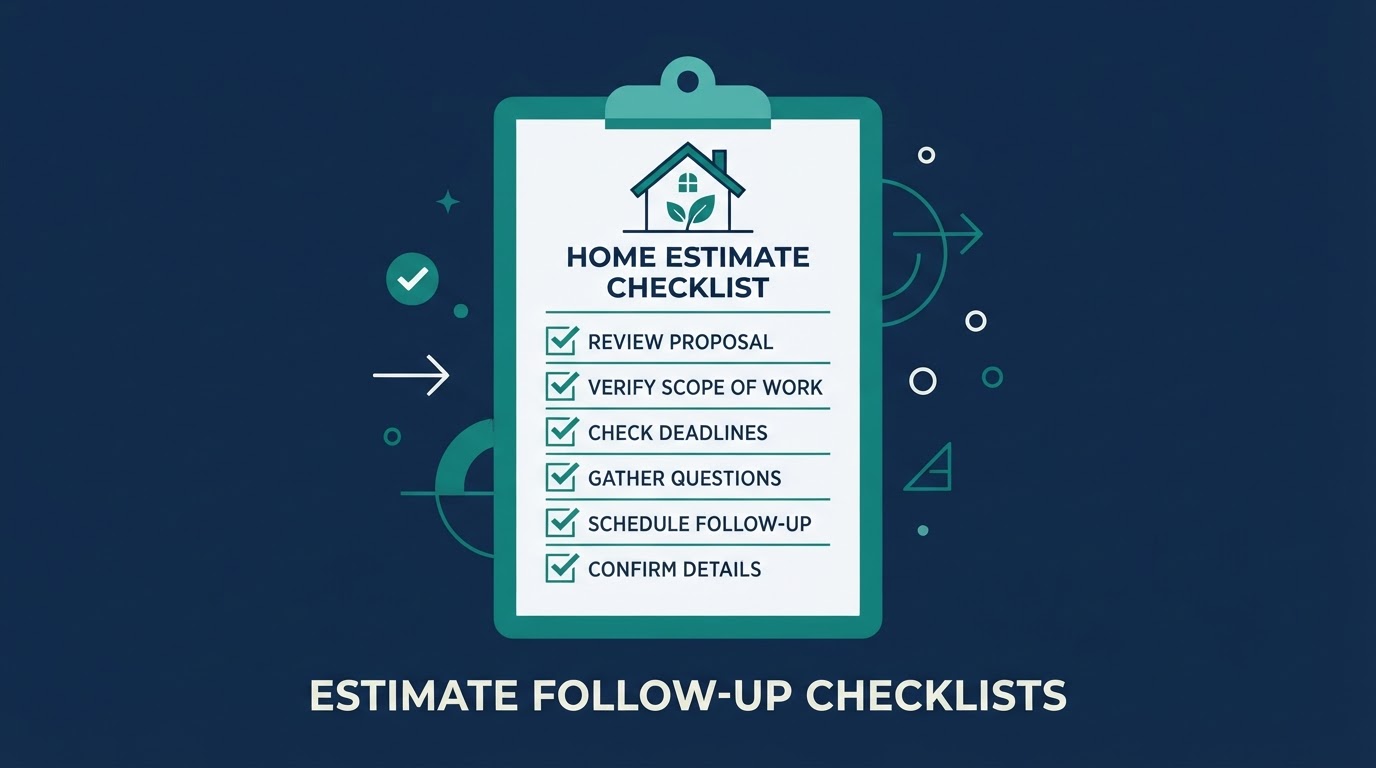
Lead Follow-Up
Estimate follow-up checklist
Healthy-home estimates (waterproofing, water treatment, air quality) often involve long consideration windows. A simple follow-up checklist keeps proposals from going cold.