
Local SEO
Local SEO for Healthy Home Service Companies: A Practical Foundation

Local SEO for home service companies means getting your Google Business Profile, service pages, mobile contact points and reviews organized so nearby homeowners can find you. Here's a practical foundation.
Introduction
Digital Growth Systems (DGS) is a marketing technology, website, CRM and automation company based in Greer, South Carolina. We work with owner-operated healthy-home service businesses across the United States, and local SEO is the foundation we start with. In plain terms, local SEO for home service companies means getting your Google Business Profile, service pages, mobile contact points and reviews organized so nearby homeowners can find you and reach you. It does not mean a ranking guarantee. Nobody honest can sell you one, and we don't.
DGS does not do the remediation, waterproofing, testing or pest work. We build the systems behind the phone ringing: a functional website, organized inquiries, follow-up, and sustainable growth. Our seven connected tools are offered together at $297/month, and printing is scoped separately. You can see how the pieces fit on the product directory or Book a Demo.
Most of this work is boring. That's the good news.
What Does Local SEO Actually Involve for Service Companies?
Agencies love to dress this up like rocket science. It isn't. Google's own explanation says local results come down to relevance, distance and prominence, and you can't change distance. So you work on the other two: make it obvious what you do and where, and give people reasons to trust you.
Picture a hypothetical crawlspace encapsulation company in Greer. The owner has a profile that says "contractor," a homepage that lists nine services in one paragraph, and three Facebook reviews. Nothing is wrong, exactly. Nothing is clear either.
Google Business Profile
Your profile is the front door for most local searches. It's where the map pack pulls from, and it's often the first thing a homeowner with a wet basement sees. Treat it as a living asset, not a one-time setup.
Website Structure
Your site has to back up what the profile claims. Clear services, clear service areas, a tap-friendly phone number, and an estimate form that drops straight into your CRM. That's the heart of our Local SEO foundation, which also covers the title, meta and internal-link basics.
Reviews and Consistency
Reviews feed prominence, and your name, address and phone details should match everywhere they appear. BrightLocal's research found that the vast majority of consumers read online reviews for local businesses. Homeowners vet you before they ever call.
How Do You Set Up a Google Business Profile Correctly?
Accuracy first, cleverness never. Here's the order we'd work in:
Confirm your business name, phone and website match what's on your site and invoices.
Set your service area honestly.
Pick a primary category, then secondary ones that really apply.
List the services you actually perform.
Upload real photos and keep them coming.
Whitespark's local ranking factors study keeps putting primary category and on-page signals near the top, which tells you where the effort belongs.
Service Area Settings
If you work out of a shop or home office and visit customers, you're a service-area business. Define the areas you really travel to. A Greer-based radon mitigation company might list Greer, Taylors, Lyman, Wellford and Duncan, then stop. Listing the whole state doesn't make you relevant statewide. It makes you look careless, and it won't match your website.
Categories and Services
Choose categories that mirror the work. A basement waterproofing company shouldn't pick "general contractor" because it sounds broader. Then make sure the services listed on the profile show up as pages on your site. When the profile says "mold testing" and the site never mentions it, you've created a mismatch Google has to guess about.
Photos and Updates
Real crew photos, real jobs, real trucks. Skip the stock imagery. Fresh photos and occasional updates signal an active business and help a nervous homeowner picture who's coming through the door. None of it is a ranking promise. It's maintenance, like oil changes.
Which Service and Town Pages Should You Build First?
Start where the money is. Look at the last twelve months of jobs and ask which services and which towns paid the bills. Build those pages first.
Priority | Page type | Hypothetical example |
|---|---|---|
First | Core service page | Crawlspace encapsulation |
First | Primary town page | Greer, SC |
Second | Service plus nearby town | Water damage restoration in Simpsonville |
Later | Secondary services | Dehumidifier installation |
Real Service Areas
Only build town pages for places you serve and want work from. A page for Spartanburg you'd never drive to is a trap: it brings leads you decline, and it dilutes the rest of the site. DGS defaults to Greer and the Upstate in examples, but the rule travels nationwide. Match the map to the territory.
One Page Per Service
One focused page per service. Mold remediation gets its own page, and water filtration gets its own. Whitespark's analysis notes that dedicated service pages carry real weight in local organic results. Each page needs a call button and a short estimate form, plus links to related services.
Don't build a giant silo maze before the basics are in place. Simple beats clever.
Unique Local Detail
Copy-and-paste town pages with the city name swapped are easy to spot. Add what you actually know: which neighborhoods you cover, typical drive times, common problems in older Upstate homes with crawlspaces, how your scheduling works. If you can't write one honest paragraph about a town, you probably shouldn't have a page for it.
How Should Titles, Meta Descriptions, and Internal Links Work?
They're housekeeping. Important housekeeping, but housekeeping.
Title Patterns
Pick a pattern and hold it. Something like "Service + City, ST | Company Name" works across pages and tells searchers what they'll find. Keep titles readable. Stuffing three keywords into one is a good way to look desperate.
Meta Descriptions
Meta descriptions don't directly lift rankings, but they shape whether someone clicks. Write one honest sentence or two: what you do, where you do it, how to reach you. No promises you can't keep.
Internal Links
Link service pages to the town pages that matter, and link everything toward your estimate form and phone number. A homeowner reading about crawlspace moisture should be one tap from asking for an estimate. Internal links also help search engines understand how your pages relate. For schema, Google's structured data documentation explains LocalBusiness markup, which is worth a look once the basics are solid.
Why Do Mobile Calls and Forms Decide Local Results?

Because the person searching is usually standing in the problem. Wet carpet. A musty smell. Droppings in the garage. They're on a phone, and they'll contact whoever makes contacting easiest.
Tap-to-Call Buttons
A phone number that isn't tappable on mobile is a small betrayal. Put a call button where thumbs naturally land, and keep it visible as people scroll.
Short Estimate Forms
Name, phone, address or ZIP, and a short description of the issue. That's usually enough. Every extra field costs you completions. Submissions should land in your all-in-one inbox with a stage, a note and an owner, so nothing sits in somebody's email.
Missed Call Follow-Up
You can't answer every call while you're in a crawlspace. Missed Call Text Back sends a configured acknowledgment, and then a human on your team follows up. It isn't emergency dispatch, and it doesn't promise an instant human reply. It simply keeps the caller from feeling ignored while you finish the job.
How Do You Earn Honest Reviews Consistently?
Ask. Every time, in a system, not when you remember. BrightLocal's consumer review survey suggests shoppers weigh recent reviews heavily, so a steady trickle beats a burst followed by silence.
Who to Ask
Customers who actually received the work and had a reasonable experience. No incentives, no review gating, and no hand-picking only the happy ones to funnel toward Google. Our Review Funnel is built around consistent, honest requests. We can't promise a star rating or a review count, and anyone who does is selling something.
When to Ask
After the job is done and the customer has had a moment to see the result. For a water treatment install, that might be a few days after the system's running. Automated follow-up with agreed sequences can time it, honoring replies and opt-outs.
How to Respond
Answer everyone, including the grumpy ones. Be brief, be human, and don't argue publicly. Never invent a reply that isn't true. Future customers read your responses as closely as the reviews.
Do Citations Matter More Than the Basics?
No. Keep your name, address and phone consistent on places like Yelp, Apple Maps and Bing, and move on. I'd be wary of paying anyone to churn out directory listings so they can hand you a fat spreadsheet. Fix the profile, the pages, the mobile experience and the review habit first. Citations are seasoning, not the meal.
How Long Does Local SEO Take to Show Movement?
Longer than you want. Many practitioners describe early movement around 60 to 90 days and compounding closer to six months, but that's a rough industry sense, not a promise, and results depend on competition, your market and how consistently you keep at it. DGS builds the foundation. Ongoing custom SEO campaigns and ad management are separate. Anyone promising instant dominance is selling a fantasy.
What Should You Measure Each Month?
Skip vanity numbers. Track what turns into work.
Metric | Why it matters |
|---|---|
Inquiries captured in the CRM | Shows real demand, by source |
Missed calls and text-back follow-up | Reveals leaks in your response |
Calls and form fills from mobile | Tells you if the site converts |
Review volume and sentiment | Tracks reputation health |
Campaign results (referral, seasonal, reactivation) | Shows which customer campaigns earn their keep |
Pair that with your profile's own call and direction numbers, and you'll know more than most competitors do.
FAQ
Is local SEO a one-time project? No. The setup is a project, but reviews, photos and page upkeep are ongoing habits.
Do I need a page for every town near Greer? Only the ones you serve and want work in. Start with your main towns and expand when demand shows up.
Can DGS guarantee rankings or leads? No. We provide foundational structure, a functional website, CRM capture, follow-up, review requests and campaign templates. Rankings and lead volume depend on many factors we don't control.
What about Google's paid options? Local Services Ads are a separate channel with their own verification process, and advertising management is outside what DGS includes. See pricing for what's covered.
Does DGS replace my crew or my dispatcher? Never. We organize the inquiries; your team does the work and the human follow-up.
Conclusion
The playbook is short. An accurate profile, honest service areas, one page per service, a few town pages with real detail, tap-friendly contact points, consistent review requests, and follow-up that doesn't drop leads. Do those well and keep going. If you'd like to see how the connected systems work together for a business like yours, Book a Demo and we'll walk through it.
Want these workflows set up for your business?
The Digital Growth System includes missed-call text-back, estimate follow-up, and honest review requests, one plan, $297/month.
Keep reading

Lead Follow-Up
Missed-call follow-up basics
Most healthy-home service companies miss calls every day, not because they're disorganized, but because they're on a job. Here's how to think about follow-up so those calls don't disappear.
Lead Follow-Up
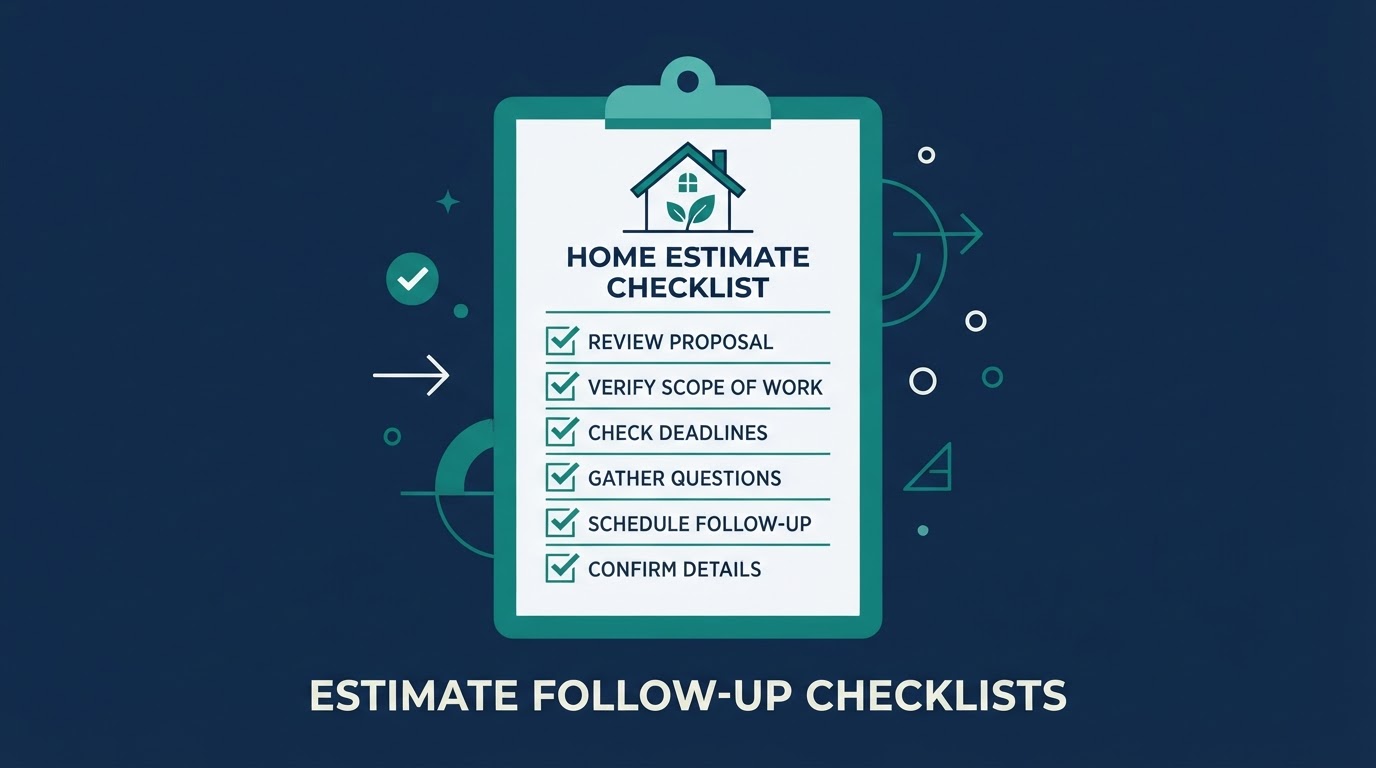
Estimate follow-up checklist
Healthy-home estimates (waterproofing, water treatment, air quality) often involve long consideration windows. A simple follow-up checklist keeps proposals from going cold.