
Websites
What a Contractor Website Needs to Turn Visitors Into Estimate Requests

A contractor website turns visitors into estimate requests when it says what you do, shows where you work, proves the work is real, and makes calling or requesting an estimate easy on a phone. Here's how to build one that works.
Introduction
A contractor website turns visitors into estimate requests when it does five things well: it says plainly what you do, shows where you work, proves the work is real, makes calling or requesting an estimate easy on a phone, and sends every inquiry to a place where someone follows up. Digital Growth Systems (DGS) is a marketing technology, website, CRM and automation company based in Greer, South Carolina, serving owner-operated healthy-home service businesses across the United States. That includes mold remediation, water damage restoration, crawlspace and waterproofing, water treatment, indoor air quality, radon, and pest control. We build the marketing plumbing. We don't do the remediation, the water treatment, or the pest work. You do.
Our focus is connected systems, organized inquiries, steady follow-up and growth that doesn't depend on a lucky month. If you'd rather talk it through than read, you can book a demo any time.
Now, the long version.
Why Does an Owned Website Beat Shared Lead Marketplaces?
Because you can't change a single thing about how Angi, Thumbtack or HomeAdvisor present you, and you can change everything about your own site. Marketplaces rent you attention. A website is attention you keep.
That doesn't make marketplaces evil. Some crawlspace outfit in the Upstate with an empty schedule in February might happily take what they offer. But treat them as a spigot you don't control, not a foundation.
Shared Lead Costs
The core problem with shared leads is arithmetic. The same homeowner request is commonly sold to several contractors at once, so you're paying to join a bidding scramble where the fastest or cheapest voice often wins. Your cost per booked job depends on how many of those races you lose, and you don't set the price of entry.
To be clear about scope: shared lead marketplaces and managed lead services are separate from what DGS offers. We don't promise guaranteed leads or rankings, and ongoing custom SEO campaigns and advertising management are scoped separately.
Exclusive Inquiries
When someone fills out the form on your own site, that inquiry is yours alone. It lands in your CRM, gets an owner, a stage, notes and a task. Nobody else's phone buzzes. Nobody undercuts you before you've picked up the call.
Long-Term Asset
A functional website with clear service pages, service-area pages, and foundational title, meta and internal-link work compounds slowly. Search relevance takes time, and we won't pretend otherwise or promise a ranking. But the pages you build this quarter are still working next year, which is more than you can say for a lead you bought on Tuesday.
Owned website | Shared lead marketplace | |
|---|---|---|
Who controls the page | You | The platform |
Who else sees the inquiry | Usually only you | Often several competitors |
Follow-up data | Lives in your CRM | Lives partly on their platform |
Time to see traction | Slower, builds over time | Faster, but you keep paying |
What Do Homeowners Look for Before Requesting an Estimate?
Reassurance, mostly. Someone with a wet basement or a musty smell isn't browsing for fun. They're nervous, a little embarrassed, and comparing you against one or two others in a hurry. Trade publications like Roofing Contractor regularly point out how much of that urgent research happens on phones, which is why your first screen matters more than your About page.
A quick gut check for the top of your homepage:
A one-line statement of the services you actually perform
The cities or counties you cover
A tap-to-call button and a short estimate form
One or two real project photos
A license or insurance mention if your state or trade requires one (check your own state rules; this isn't legal advice)
Clear Services
Say "mold remediation" and "crawlspace encapsulation," not "solutions for your home's needs." Visitors decide in seconds whether you're the right fit. Vague copy makes them leave rather than ask.
Real Project Proof
Use real photos and plain project descriptions: what was found, what was done, what the space looked like afterward. Skip invented testimonials, always. And stay away from promising health outcomes. A page about radon mitigation can describe your process without claiming anyone will be healthier because of your website. Referrals still carry plenty of weight in this industry, too; Buildertrend's construction statistics show builders leaning heavily on word of mouth, which is a good reason to make your proof easy to share.
Visible Service Areas
Put your service area where people can see it. A pest control company in Greer might list Greer, Taylors, Simpsonville, Greenville and Spartanburg right on the homepage, then give each its own page. Outside the Upstate, same idea with your own cities. Homeowners who don't see their town assume you don't come to it.
How Should a Mobile Website Handle Calls and Forms?
Like a front desk that never gets flustered. Most of your visitors are holding a phone, probably with one thumb, possibly standing in a damp garage. If calling takes three taps and a pinch-zoom, you've lost them to the next result.
Tap-to-Call Buttons
Make the phone number a real tap-to-call link, and keep it visible as people scroll. Then plan for the calls you can't answer. A missed-call text back sends a configured acknowledgment so the caller knows they reached you, and then your team follows up. It's not emergency dispatch, and it's not a promise of an instant human reply. Set that expectation on the site itself, especially for after-hours.
Short Estimate Forms
Name, phone, address or ZIP, service needed, a short description. That's about it. Every extra field costs you submissions. Averages vary widely by industry, and HubSpot's marketing statistics are a decent reminder that most website visitors never convert at all, so don't make the ones who try work harder than they have to. Each submission should flow straight into the CRM and, where configured, trigger an acknowledgment that honors opt-out preferences.
Fast Load Speed
Heavy photo galleries are the usual culprit. Compress images, skip autoplay video in the header, and test on a cellular connection, not your office Wi-Fi. A functional website includes the foundational technical work for this, so you aren't hand-tuning file sizes yourself.
Build Service and Area Pages That Match Local Searches
People search the way they talk: "crawlspace moisture Greer SC" or "water damage cleanup near me." Your site should have a page that matches each of those intentions, instead of one crowded Services page trying to cover everything.
One Page per Service
One service, one page. Each gets its own explanation, process, photos, and a clear next step. Don't pad it with filler paragraphs written for search engines, and don't claim results you can't back up. Search Engine Journal's local SEO coverage keeps returning to the same themes: relevance, proximity and reviews. You can only influence two of those directly, and relevance starts with a page that's actually about the thing.
Greer and Upstate Examples
Say you run a water treatment company out of Greer. Your hypothetical setup might include a "Whole-House Water Filtration" page, plus area pages for Greer, Duncan, Lyman and Greenville that mention neighborhoods, typical property types, and how your visits work. Each area page should say something true and specific. Swapping the city name into identical text is lazy, and visitors notice.
Titles and Internal Links
Write a clear title tag and meta description for every page, then link the pages together sensibly: services to areas, areas back to services, everything back to the estimate form. Our local SEO foundation covers this structural groundwork. It doesn't guarantee rankings, and custom ongoing SEO campaigns are a separate conversation.
While you're at it, keep your Google Business Profile accurate, with the same name, address, phone and service areas as your site.
Connect Every Inquiry to a CRM and Follow-Up Process
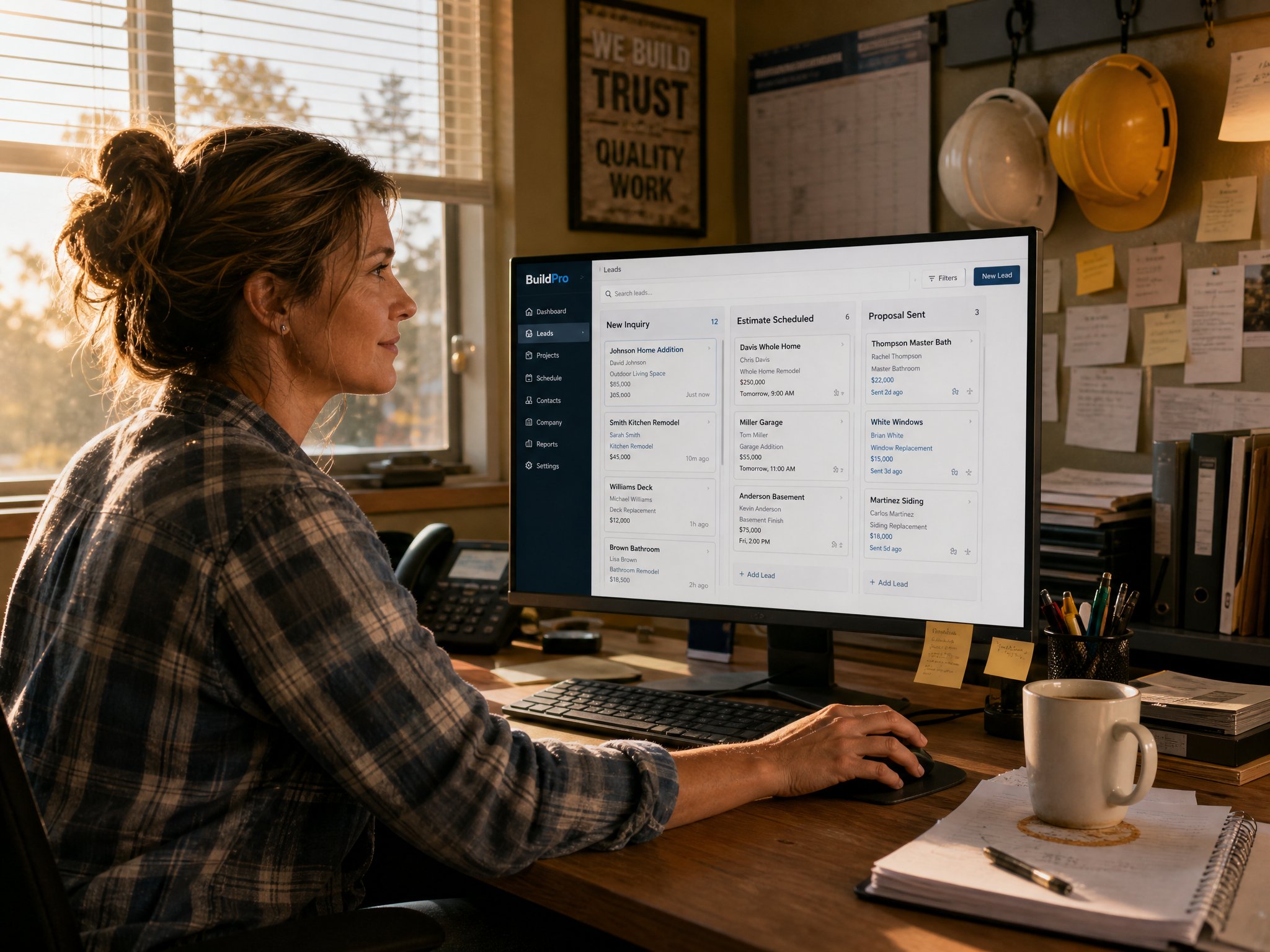
A website that collects inquiries into an email inbox nobody checks on Friday afternoons is a leaky bucket. The fix is boring and effective: every form fill, call and text goes into one organized place. DGS's all-in-one inbox supports stages, notes, tasks, team ownership and the connected channels it supports (not every tool on earth, so confirm what applies to you).
Keep your stages simple. New inquiry, contacted, estimate scheduled, estimate sent, won, lost. Someone owns each one. That's it.
Then layer on automated lead follow-up: inquiry acknowledgments, estimate reminders and agreed sequences that stop when a customer replies or opts out, where configured. Speed matters here. One contractor-marketing analysis from Instant Business Pro argues that the first business to respond wins a large share of jobs, and while I'd treat any single percentage with caution, the direction is hard to argue with.
After the job, ask for reviews consistently from appropriate customers through a review funnel, honestly, with no incentives and no gating of unhappy customers. Seasonal and maintenance reminders can go out through customer campaigns, which are ready-to-customize templates rather than unlimited custom agency work. Calling, texting, email and AI usage terms are confirmed before anything is activated.
Track Analytics to See Which Pages Produce Estimate Requests
Traffic is vanity. Estimate requests are the number that pays the crew.
Set up analytics so you can see which pages visitors were on before they called or submitted a form. Maybe your radon page quietly drives most requests while your homepage gets the credit. Maybe a Spartanburg area page gets visits but no calls. That tells you where to add photos, tighten the headline, or move the button.
Pair that with CRM data. If calls are coming in but nobody is booking estimates, you have a follow-up problem, not a website problem. If forms are rare, you have a page problem. Knowing which is which saves months of guessing. The Small Business Administration also publishes practical guidance for small firms adopting digital tools, if you want a neutral starting point.
Run This Contractor Website Audit Checklist
Grab your phone, not your laptop, and walk through these:
Can you tell what services the business performs within five seconds?
Are service areas visible, with Greer, SC or whichever local areas apply?
Does the phone number tap-to-call from every page?
Is the estimate form short and does it land in your CRM?
Does each service have its own page with real project proof?
Do titles, meta descriptions and internal links make sense?
Does the site load quickly on cellular data?
Is a missed-call text back configured, with realistic timing stated?
Do follow-up sequences stop on reply or opt-out?
Can you see which pages lead to estimate requests?
Anything you can't check off is your next project.
FAQ
Does a website guarantee more leads? No. A well-built site removes friction and organizes what comes in. Volume depends on your market, reputation, search visibility and effort, and nobody can honestly guarantee it.
What does missed-call text back actually do? It sends a configured acknowledgment when a call is missed, then your team follows up. It isn't emergency dispatch and doesn't promise an instant human response.
Can I ask happy customers for reviews? Yes, consistently and honestly, from appropriate customers. No incentives, no review gating, and no guaranteed star ratings.
Is SEO included? Foundational structure and relevance work is included. Ongoing custom SEO campaigns and advertising management are scoped separately.
Do I need to give up marketplaces entirely? Not necessarily. Just don't let them be your only door.
Conclusion
An owned website, connected to a CRM with disciplined follow-up, honest review requests and foundational local SEO, gives a healthy-home service business something sturdier than rented leads. It's slow compared with buying clicks. It's also yours.
DGS offers seven core connected tools together at $297/month, and the demo is where we walk through your setup, including business phone details. Details on each piece live on our pricing and product pages, and printing services are available as a separately quoted option. When you're ready, book a demo and we'll look at your site together.
Want these workflows set up for your business?
The Digital Growth System includes missed-call text-back, estimate follow-up, and honest review requests, one plan, $297/month.
Keep reading
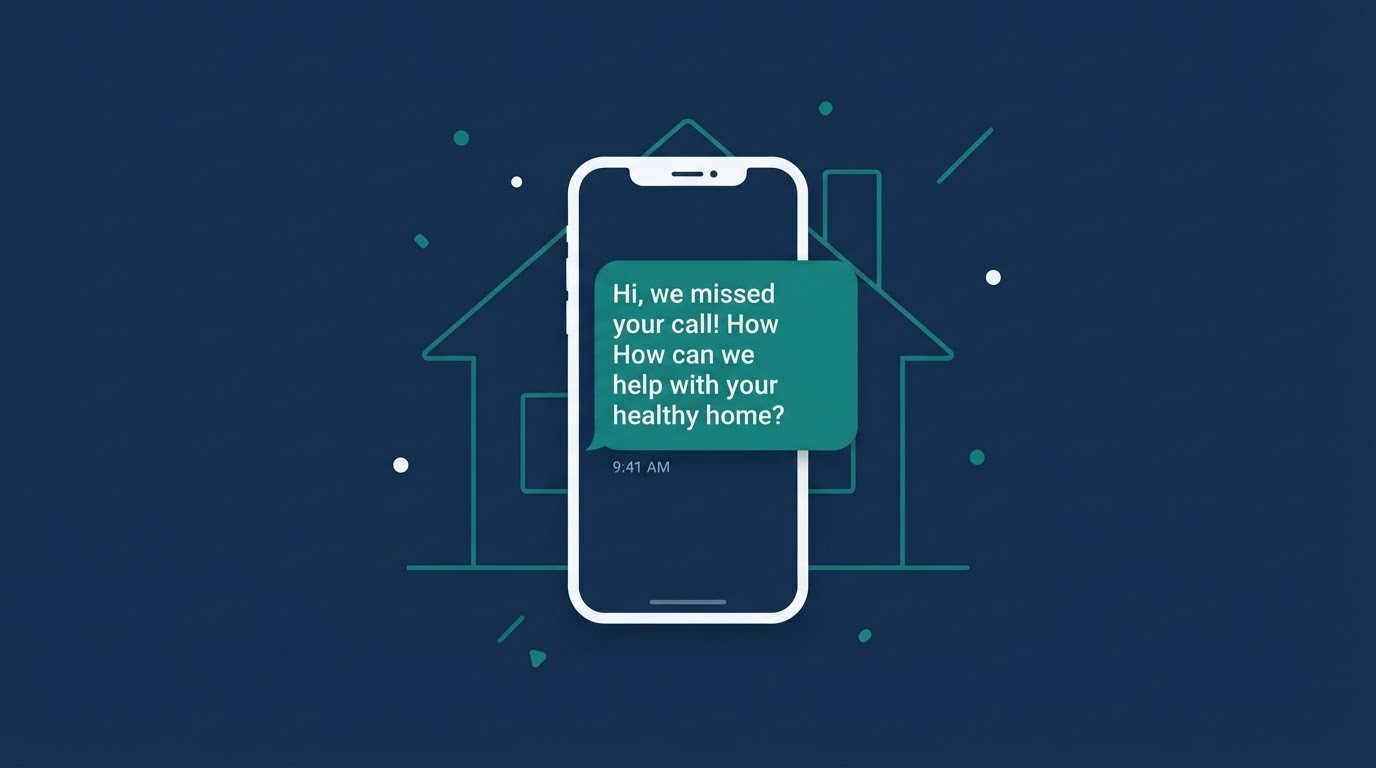
Lead Follow-Up
Missed-call follow-up basics
Most healthy-home service companies miss calls every day, not because they're disorganized, but because they're on a job. Here's how to think about follow-up so those calls don't disappear.
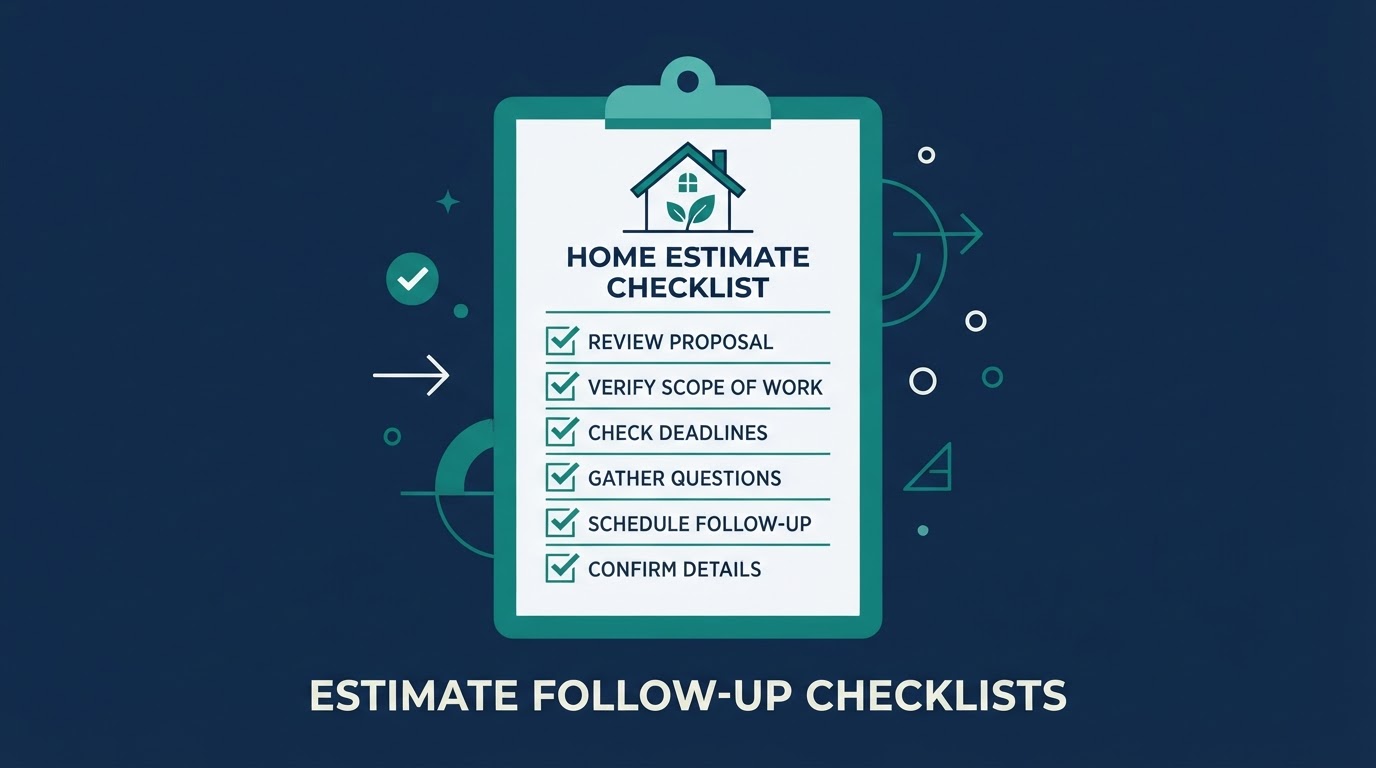
Lead Follow-Up
Estimate follow-up checklist
Healthy-home estimates (waterproofing, water treatment, air quality) often involve long consideration windows. A simple follow-up checklist keeps proposals from going cold.